Desertinho Atlantic Whale observations works together with several Humpback whale (Megaptera novaeangliae) Whale Photo-ID projects on the Atlantic Ocean since 2012. I’ am really proud to share my data and information together with other Humpback whale Photo-ID researchers worldwide. In 2014 we achieved the ultimate result to identify a Humpback whale (photo 2) 3 times in 8 years time. In 2006 near the Acores, in 2013 near the Cape verdian islands, and in 2014 I photographed that specific Humpback together with another Humpback near the Acores again. This specific Humpback gives us just a little bit of information about their migration routes, age, behaviour, and feeding patterns in the Atlantic Ocean.
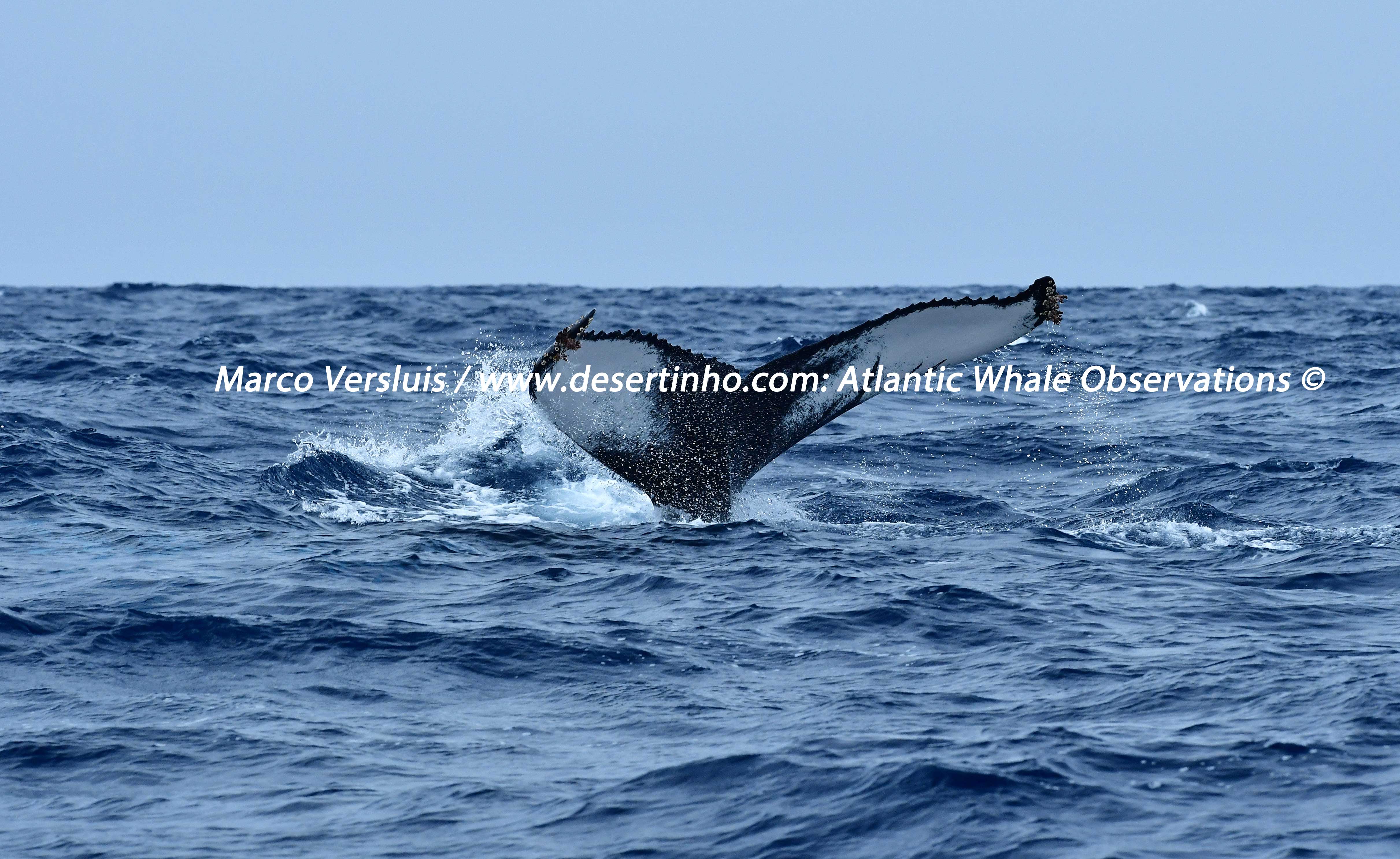
The first photo was made near the Acores in 2018 and this sighting of that Humpback whale was a little bit late in their migration season. The Atlantic Ocean turned allready blue, instead of green, and this individual Humpback was one of the latest krill eating whales that left that area before it travelled further to the Arctic regions. At this moment we are trying to match this Humpback whale for Humpback whale photo-ID.
Photos 3, 4, and 5 are all from 2025 and depict three different humpback whales. 2025 was a very special year for humpback whale sightings for me. I saw no fewer than six different individuals, with the humpback whale on photo 5 being the most remarkable sighting. This humpback whale leaped out of the water no fewer than six times! This is truly exceptional to witness, as is the behavior displayed by the humpback whale in photo 5. This behavior is called “lobtailing,” in which the whale raises its tail high out of the water and slaps the surface. This humpback whale did this to communicate with a fellow humpback whale spotted a few miles away.
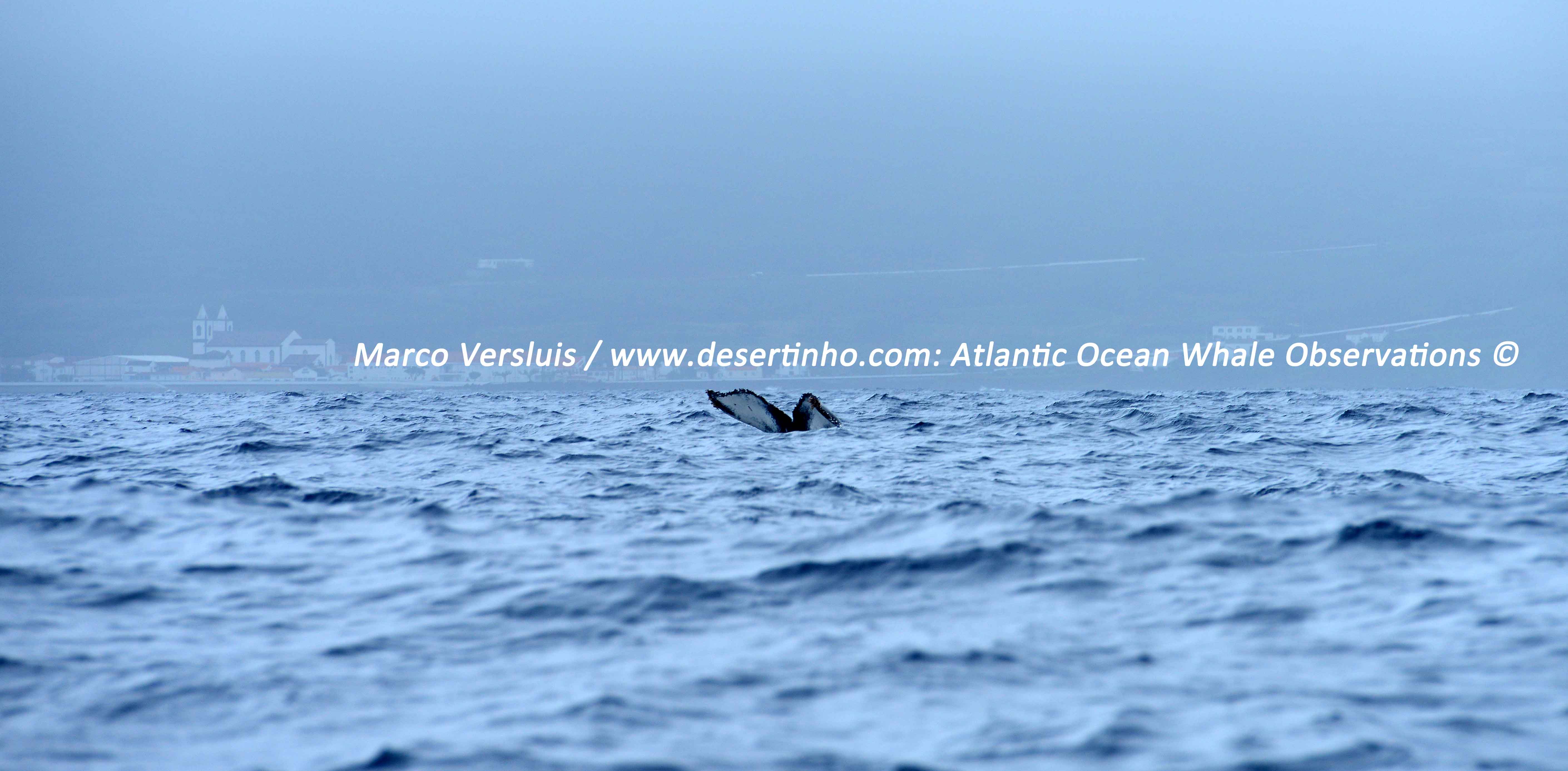


Desertinho Atlantic Whale observations werkt sinds 2012 mee aan diverse internationale Bultrug (Megaptera novaeangliae) Walvis foto-ID projecten. Ik ben er trots op dat wij onze data en informatie delen met diverse walvis onderzoekers wereldwijd. De laatste jaren hebben we veel bereikt door diverse Bultruggen (Megaptera novaeangliae) “Whale photo-ID” matches te hebben gemaakt. In 2014 bereikten we het ultieme resultaat door een Bultrug (foto 2) voor de 3de keer, in 8 jaar tijd, te identificeren. De eerste keer zagen we haar, in 2006, bij de Azoren, in 2013 bij de Kaapverdische eilanden, en in 2014 fotografeerde ik deze Bultrug wederom bij de Azoren. Deze specifieke waarneming, van deze Bultrug, levert ons heel veel waardevolle informatie op voor ons onderzoek naar Bultrug migratie routes, leeftijd, gedrag, en hun voeding patroon.
De eerste foto heb ik gemaakt in 2018 in bij de Azoren. De waarneming van deze bultrug was laat in hun migratie seizoen en was dit een van de laatste Bultruggen die Azoren passeerden op hun doorreis naar de pool gebieden. Op het moment deze waarneming was de Atlantische Oceaan al blauw, in plaats van groen van kleur wat betekend dat er bijna geen krill meer aanwezig voor hen. Op dit moment in 2025 proberen we deze bultrug nog steeds te matchen via ons bultrug Foto-ID project.
Foto’s 3, 4, en 5 zijn allemaal uit 2025 en betreft het 3 verschillende bultruggen. Het jaar 2025 was een heel bijzonder jaar voor wat betreft de waarnemingen van bultruggen voor mij. Maar liefst 6 verschillende individuen waarvan de bultrug van foto 5 de meest bijzondere waarneming was. Deze bultrug sprong namelijk maar liefst 6 keer uit het water! Dit is echt heel uitzonderlijk om mee te maken net als het gedrag wat de bultrug vertoonde op foto 5. Dit gedrag noemen we “lobtailing” waarbij de walvis zijn staart hoog uit het water steekt en op het wateroppervlak slaat. Deze bultrug deed dit om te communiceren met een soortgenoot die enkele zeemijlen verder was gesignaleerd.